


When Commercial Truck Tires Blow Out on SR-14
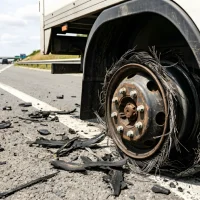
A commercial truck tire can fail with little warning to the motorists traveling beside it. When a steer tire blows out, or a tire loses its tread at freeway speed, the driver may struggle to keep a tractor-trailer within its lane. Tire fragments can strike surrounding vehicles, while sudden steering corrections can lead to sideswipes, rollovers, or collisions across multiple lanes.
State Route 14 runs through Palmdale and the Antelope Valley as part of the Antelope Valley Freeway, making tire condition especially important for commercial trucks traveling through the area. When a tire failure contributes to a serious collision, guidance from an experienced Palmdale truck accident lawyer can help identify whether improper maintenance, excessive loading, a defective tire, or another preventable problem contributed to the crash.
A Tire Blowout Can Cause a Sudden Loss of Truck Control
A tractor-trailer does not always respond predictably when a tire fails. The effect depends in part on which tire ruptures, the truck’s speed, the weight and distribution of the load, and how the driver reacts immediately afterward.
Failure of a steer tire can be particularly dangerous because the front tires directly affect the driver’s ability to control the truck’s direction. A sudden loss of pressure may pull the truck toward one side of the freeway and require careful steering to keep the vehicle under control. Abrupt braking or an aggressive steering correction can make an already unstable truck more difficult to manage.
A tire failure elsewhere on the tractor or trailer can create different hazards. Pieces of separated tread may scatter across several lanes, forcing nearby drivers to brake or swerve. A damaged tire can also affect the stability of a heavily loaded trailer and contribute to a loss of control as the driver attempts to move out of traffic.
Tire Pressure Can Affect Heat, Wear, and Load Capacity
Commercial truck tires must be inflated to a pressure appropriate for the load they are carrying. An underinflated tire flexes differently as it rolls under a heavy truck, generating heat and placing additional stress on the tire structure.
That heat can build over time. A tire that repeatedly runs below proper inflation may develop abnormal wear or internal damage long before the driver notices an obvious problem from behind the wheel.
Pressure also has to match the weight being carried. A tire that performs properly under one load may be underinflated for a heavier one, especially when weight is concentrated on a particular axle or portion of the trailer. Repeated heat and stress under those conditions can gradually weaken the tire before the blowout occurs.
Tread Separation Can Develop Before the Tire Fails
Not every tire failure begins with a dramatic explosion. Tread separation can develop gradually as the outer tread begins pulling away from the underlying tire structure.
Commercial truck tires cannot remain in service when they show tread or sidewall separation, exposed belt or ply material, or other serious structural damage. Federal standards also require at least 4/32 of an inch of tread on front tires and 2/32 of an inch on most other commercial truck tires.
A tire approaching failure may show irregular wear, cracking, bulging, exposed material, or early separation before it finally comes apart on the freeway. Visible deterioration of that kind may show that the tire should have been removed from service before the truck entered SR-14.
Commercial Truck Tire Inspections Leave a Paper Trail
Motor carriers are required to systematically inspect, repair, and maintain the commercial vehicles they operate. Tire condition is part of that responsibility.
Service records can show when tires were inspected, rotated, replaced, or repaired. They may also reveal recurring pressure problems, alignment issues, prior complaints, or maintenance performed shortly before the collision. Records from other tires on the same tractor or trailer may show whether the failed tire was part of a broader pattern of wear.
Pre-trip inspection records can add another layer. A damaged sidewall, worn tread, exposed material, or visible pressure problem should be addressed before the truck enters the freeway. Gaps in routine inspection records may also help explain how a visibly deteriorated tire remained in service long enough to fail on SR-14.
Heavy or Poorly Distributed Loads Can Increase Tire Stress
Commercial truck tires are designed to carry substantial weight, but every tire has a load limit. Excess weight can place more stress on the tire and increase heat as the truck travels at freeway speed.
An overloaded axle can concentrate that weight on one part of the vehicle. Poor cargo distribution can create a similar problem even when the overall shipment does not appear excessive.
Loading records, bills of lading, scale tickets, and axle-weight information may help show how much weight the failed tire was carrying before the blowout. A heavy or uneven load can place additional strain on a tire that is already underinflated or showing signs of wear.
Cargo movement can also change the balance of the trailer after the trip begins. A load that shifts in transit may transfer weight toward one side or axle, increasing stress that was not present when the truck first left the terminal.
Some Tire Blowouts Begin With a Manufacturing Defect
Poor maintenance is not the only possible explanation for a commercial truck tire failure. A tire may contain a defect involving its materials, construction, bonding, or other components that causes it to fail before the end of its expected service life.
A suspected defect calls for close examination of the tire itself. The manufacturer, model, production information, mileage, prior repairs, and remaining physical structure may all provide clues about why the tire came apart.
Similar failures involving tires from the same production run can also deserve attention. A tire that fails despite proper inflation, reasonable use, and regular maintenance may point toward a problem that began during manufacturing rather than on the road.
Preserving the failed tire becomes especially important in that situation. Discarding the carcass or separated tread can eliminate the evidence needed to distinguish defective construction from underinflation, road damage, overloading, or prolonged wear. When the tire itself was defective, responsibility may extend to the manufacturer or another company in its distribution chain.
Tire Fragments Can Preserve Evidence of the Failure
After a blowout on SR-14, tire debris may look like ordinary wreckage. It can instead preserve some of the most useful physical evidence from the scene.
Separated tread, sections of sidewall, belts, and pieces of the tire carcass may show heat damage, impact marks, excessive wear, or separation that developed over time. Their size and location can also help establish where the tire began to come apart and how debris spread across the freeway.
Photographs taken before the roadway is cleared can preserve evidence that may disappear quickly. Tire fragments can be moved by passing traffic or removed during cleanup, while the damaged truck may later be repaired or returned to service.
The condition of the failed tire and nearby tires can also provide context. Similar wear or damage on another wheel position may suggest that the blowout was not an isolated problem.
Expert Analysis Can Separate the Cause From the Result
A badly damaged tire after a major truck collision does not automatically establish that the tire caused the crash. The tire may have failed first, or it may have been destroyed when the truck struck another vehicle, a barrier, or roadside debris.
Tire specialists and accident reconstruction experts can examine the preserved physical evidence and compare it with the way the collision unfolded. Signs of prolonged underinflation, heat damage, or tread separation may point toward a problem that developed before impact. Fresh cuts or crushing damage may support a different explanation.
Electronic vehicle data and witness accounts can provide useful context. A sudden steering movement, rapid change in speed, or reports of tread debris appearing before the truck left its lane may help establish when the failure occurred.
The cause of a blowout may become disputed once tire debris is cleared and the damaged truck is repaired. In those circumstances, early guidance from a Palmdale truck accident lawyer can help preserve relevant evidence and determine whether the tire failure contributed to the loss of control.
Contact Kistler Law Firm
A commercial truck tire blowout can leave families facing serious injuries, vehicle damage, medical expenses, and uncertainty over why a tire capable of carrying a heavy tractor-trailer failed on the freeway. Tire pressure, tread condition, inspection history, vehicle loading, manufacturing problems, and physical debris may all help explain what happened.
Kistler Law Firm represents clients in serious truck accident claims throughout Palmdale and the Antelope Valley. Contact Kistler Law Firm today to speak with a trusted Palmdale truck accident lawyer and learn how our firm can help protect your right to compensation after a truck accident caused by a tire failure.
