
Multiple-Impact Pedestrian Accidents: What Happens When More Than One Vehicle Is Involved
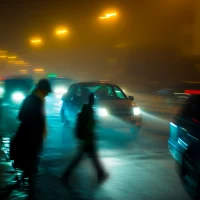
A pedestrian accident can be devastating even when only one vehicle is involved. When a person is struck by more than one vehicle, the confusion, injuries, and legal questions can become overwhelming almost immediately. A driver may hit someone in a crosswalk, and a second vehicle may strike the pedestrian seconds later. Traffic may continue moving before nearby drivers understand what has happened. Witnesses may see only part of the crash. Police may arrive to find several vehicles, scattered debris, conflicting statements, and an injured person who cannot explain the sequence of impacts.
In Palmdale and across the Antelope Valley, these crashes are especially difficult to sort out because pedestrian traffic often meets fast-moving vehicles on wide roads, near commercial driveways, and around intersections where drivers are not always looking for people on foot. After a serious collision, working with a Palmdale pedestrian accident attorney can help make sure the investigation does not stop with the first driver identified in the police report. The first version of the accident may miss another motorist whose speed, distraction, or failure to react added to the harm.
Why Multiple-Impact Pedestrian Accidents Are Different
A multiple-impact pedestrian accident is rarely a simple one-driver claim. The first impact may throw the pedestrian into another lane. A second driver may be following too closely, driving too fast for the conditions, or looking away from the road. Another vehicle may swerve and create a separate collision nearby. In the moments after the first impact, several drivers may make choices that affect whether the pedestrian suffers additional harm.
Timing matters because responsibility may depend on what each driver saw, how much time each driver had to respond, and whether evasive action was possible. Lighting, traffic speed, road design, skid marks, debris, vehicle damage, video footage, and witness statements can all help determine how the collision unfolded. Insurance companies know that uncertainty creates room for dispute. One carrier may blame another driver. Another may argue that the insured had no chance to avoid the pedestrian. The injured person can be left in the middle while each insurer tries to minimize its own exposure.
The First Impact Does Not End the Liability Analysis
The driver who strikes the pedestrian first often receives the most attention. A motorist who fails to yield in a crosswalk, speeds through an intersection, turns without checking for pedestrians, or runs a red light may be responsible for setting the entire event in motion. California drivers must use reasonable care, and that duty includes watching for people walking near intersections, parking lots, school areas, bus stops, and marked or unmarked crossings.
A later impact can still matter. A second driver may share responsibility if that driver had time to slow down, stop, change lanes safely, or avoid the pedestrian. The law does not automatically excuse every driver who arrives after the first collision. Each driver’s conduct must be reviewed based on speed, visibility, following distance, reaction time, traffic conditions, and the location of the pedestrian before impact.
How Fault May Be Divided Between Drivers
California allows fault to be divided among multiple responsible parties. In a multiple-impact pedestrian accident, one driver may be primarily responsible while another driver is assigned a smaller share of fault. The pedestrian may also be accused of contributing to the accident, especially if the crash happened outside a marked crosswalk or in an area with poor visibility.
Insurance carriers often focus on percentages because each percentage point affects what they may owe. One insurer may argue that the first impact caused the major injuries. Another may claim that later trauma cannot be separated from what has already happened. A Palmdale pedestrian accident attorney can help keep the claim focused on the complete collision rather than allowing each insurance company to isolate only the facts that favor its defense.
Why Medical Evidence Becomes So Important
Medical records are especially important when a pedestrian is struck more than once. A person may suffer head trauma, fractures, spinal injuries, internal injuries, nerve damage, severe bruising, or injuries that worsen after the second impact. Emergency room records, ambulance reports, imaging studies, surgical notes, and treating physician opinions can help connect the injuries to the full crash sequence.
Insurance companies may try to divide the injuries in a way that lowers the value of the claim. One carrier may argue that its driver caused only a minor part of the harm. Another may insist that later treatment was unrelated to the accident. The medical timeline can help show how the impacts worked together to cause injury. A pedestrian should not lose the ability to recover compensation simply because two drivers created a complicated injury picture.
Evidence That Can Reconstruct the Sequence of Impacts
A police report is important, but it may not answer every question in a multiple-impact pedestrian case. Officers may be working with limited information at the scene, especially if the injured pedestrian cannot speak, drivers give conflicting statements, or witnesses leave before police arrive. A deeper investigation may include nearby surveillance footage, dash camera video, traffic camera footage, 911 calls, vehicle damage, debris fields, skid marks, paint transfer, event data, and witness interviews.
Accident reconstruction may also help explain the order of events. Reconstruction evidence can address vehicle speed, braking distance, reaction time, impact angles, and whether a driver had enough time to avoid the pedestrian. In Antelope Valley pedestrian accidents, the surrounding roadway can be an important part of the analysis. A crash near a commercial driveway, apartment entrance, bus stop, or dark roadway shoulder may raise very different questions from a crash in a controlled intersection.
What Happens If One Driver Leaves the Scene
Some multiple-impact pedestrian accidents involve a hit-and-run driver. A fleeing driver may have caused the first impact, the second impact, or a later collision that worsened the pedestrian’s injuries. Law enforcement may look for surveillance footage, witness descriptions, license plate information, vehicle fragments, paint transfer, or nearby damage reports that help identify the vehicle.
A hit-and-run does not always end the claim. Another negligent driver may still be legally responsible, and available insurance coverage may provide another path toward recovery. Uninsured motorist coverage can also become important depending on the pedestrian’s household insurance policy and the facts of the crash. The injured person should not assume there are no options simply because one driver left the scene.
Why Early Investigation Matters
Multiple-impact pedestrian claims are time-sensitive. Video footage can disappear. Vehicles may be repaired. Debris may be cleared. Witnesses may become harder to locate. Insurance companies may begin building defenses before the injured person understands how many drivers were involved or how the impacts occurred.
Early investigation helps preserve the facts before the crash is reduced to a one-driver story. It can reveal that a later driver had more time to react than claimed, that a vehicle was traveling faster than the driver admitted, or that nearby footage captured a critical angle of the collision. For someone recovering from a pedestrian accident, that investigation can be the difference between an incomplete claim and a case that accounts for the full harm caused by every responsible party.
Contact Kistler Law Firm
If you were hit as a pedestrian and more than one vehicle may have been involved, the claim should be investigated before any insurance company is allowed to control the story. The order of impacts, the conduct of each driver, the medical evidence, the available insurance coverage, and the location of the crash can all affect the value of the case.
Kistler Law Firm represents injured pedestrians in Palmdale and throughout the Antelope Valley after serious collisions involving multiple drivers, disputed fault, hit-and-run issues, and complex injury claims. Contact Kistler Law Firm today to speak with a Palmdale pedestrian accident attorney and learn how we can help you move forward.
