


Who Is Liable When a Driver Hits a Pedestrian Walking Along a Rural Antelope Valley Road?
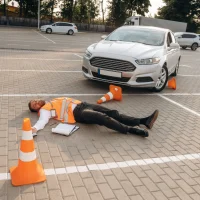
Walking beside a rural Antelope Valley road can put a pedestrian only a few feet from fast-moving traffic. Sidewalks disappear, paved shoulders narrow into dirt, and some stretches offer nowhere else to walk. If a driver drifts across the edge line, someone on foot may have almost no time or space to avoid being struck.
Fault often becomes disputed as soon as the insurer starts asking which direction the pedestrian was walking and how close that person was to traffic. Those questions matter, but they can also pull attention away from the vehicle itself. Working with an experienced Palmdale pedestrian accident attorney can help challenge an account of the accident that ignores how far the driver moved beyond the travel lane before impact.
Rural Roads Give Pedestrians Few Safe Places to Walk
Outside the more developed areas of Palmdale and the Antelope Valley, long stretches of road have no sidewalks or curbs at all. Someone traveling on foot may have several feet of paved shoulder in one area and almost none a short distance later.
Drainage cuts, loose gravel, vegetation, utility poles, and uneven ground can make that space even tighter. A pedestrian walking near the pavement may simply be following the only usable path available.
After an accident, an insurer may rely on photographs showing a wider shoulder somewhere nearby and argue that the pedestrian could have stayed farther from traffic. A closer look at the actual impact area can tell a different story. Rural roads change quickly, and the few feet available where the person was struck can matter far more than conditions farther up the road.
California Law Does Not Treat Every Roadside Pedestrian the Same
California Vehicle Code § 21956 addresses pedestrians walking on a roadway outside a business or residential district. When no sidewalk is available, the statute generally directs someone using the roadway to stay near the left-hand edge and face approaching traffic. California law also recognizes that crossing to the opposite side is not always safe.
Insurance carriers often rely on that rule when a pedestrian was walking with traffic rather than against it. From there, the argument may quickly become that the pedestrian helped cause the accident simply by being on the “wrong” side.
A rural pedestrian accident rarely turns on that fact alone. Someone walking beside the travel lane is in a very different position from a pedestrian who suddenly steps in front of an approaching vehicle. If the driver crossed an edge line before the collision, the pedestrian’s direction of travel tells only part of the story.
A Driver Can Reach a Pedestrian in Seconds
For someone walking beside a rural road, a painted edge line may be the only separation from traffic. There may be no curb, parked car, or guardrail between the pedestrian and a vehicle approaching from behind or ahead.
Only a small amount of sideways movement is needed for a driver to enter that space. A gradual drift may follow distraction or fatigue. A sharper movement can happen during an unsafe pass, while taking a curve too quickly, or after a sudden loss of control.
Even a short lapse behind the wheel can carry a vehicle a considerable distance before the driver looks back toward the road. By then, someone walking near the pavement may have nowhere to move. That sequence often says more about the collision than a later statement that the pedestrian appeared suddenly or was difficult to avoid.
Nighttime Pedestrian Accidents Are Not Just About Dark Clothing
A pedestrian struck at night on an unlit Antelope Valley road may quickly face questions about clothing, reflective material, and visibility. Drivers sometimes say they never saw the person ahead until it was too late.
Speed belongs in that discussion too. Headlights illuminate only a limited portion of the roadway, and curves, hills, weather, or oncoming glare can shorten the view even further. Traveling faster leaves less time to recognize a pedestrian and respond before reaching the edge of the lane.
Lane position matters just as much. Difficulty seeing someone beside the road does not explain why a vehicle crossed toward that person. When the car left a clear travel lane before impact, poor visibility may explain when the pedestrian came into view, but not why the driver reached the shoulder in the first place.
Comparative Fault Can Reduce a Pedestrian Accident Recovery
A driver’s insurance company has an obvious reason to place as much responsibility as possible on the pedestrian. Walking on the right side of the road may become one argument. Standing close to the pavement may become another. Even the claim that the pedestrian could have heard the vehicle approaching can enter the discussion.
California follows comparative negligence, which allows responsibility to be divided when both sides contributed to an accident. A larger percentage assigned to the pedestrian means a smaller recovery.
That makes the sequence before impact especially important. Someone on foot may have been closer to traffic than expected, while the driver was also drifting outside the lane. One does not necessarily erase the other. When an insurer tries to turn a questionable decision by the pedestrian into the entire explanation for the collision, the driver’s movement still has to be accounted for.
The First Point of Contact Can Tell a Different Story
A pedestrian struck at speed may land several feet from where the vehicle first made contact. Looking only at the final position of the injured person can create a misleading picture of where the accident began.
Marks left near the roadway can help fill in that gap. Tire tracks extending across an edge line, disturbed gravel, broken vehicle parts, or damaged personal belongings may point toward the initial impact area. Vehicle damage can add another piece to the sequence.
Contact concentrated on a mirror or front corner may fit a different path than an impact across the center of the vehicle. Police measurements, dash-camera footage, and nearby surveillance video can also help show how the driver approached the pedestrian.
When a driver says the pedestrian was standing in the traffic lane, evidence from the scene may support a very different account. A knowledgeable Palmdale pedestrian accident attorney can use that evidence to push back against an inflated share of fault and keep the focus on how the vehicle reached the pedestrian before the impact occurred.
Contact Kistler Law Firm
If you or someone you love was struck while walking along a rural road in Palmdale or elsewhere in the Antelope Valley, the driver’s insurance company may focus heavily on where you were walking. That does not make the driver’s lane position any less important, particularly when the vehicle crossed an edge line before the collision.
Kistler Law Firm represents people who have suffered serious injuries in pedestrian accidents throughout Palmdale and the Antelope Valley. Contact Kistler Law Firm today to speak with an experienced Palmdale pedestrian accident attorney who can evaluate disputed fault, address the insurer’s arguments, and pursue compensation for the injuries caused by the accident.
